Device-Specific Variations in No-Deposit Offer Redemption Rates for Virtual Wheel Games Among Loyalty Tier Members
Casey Perry · Jun 27, 2026
Device-Specific Variations in No-Deposit Offer Redemption Rates for Virtual Wheel Games Among Loyalty Tier Members
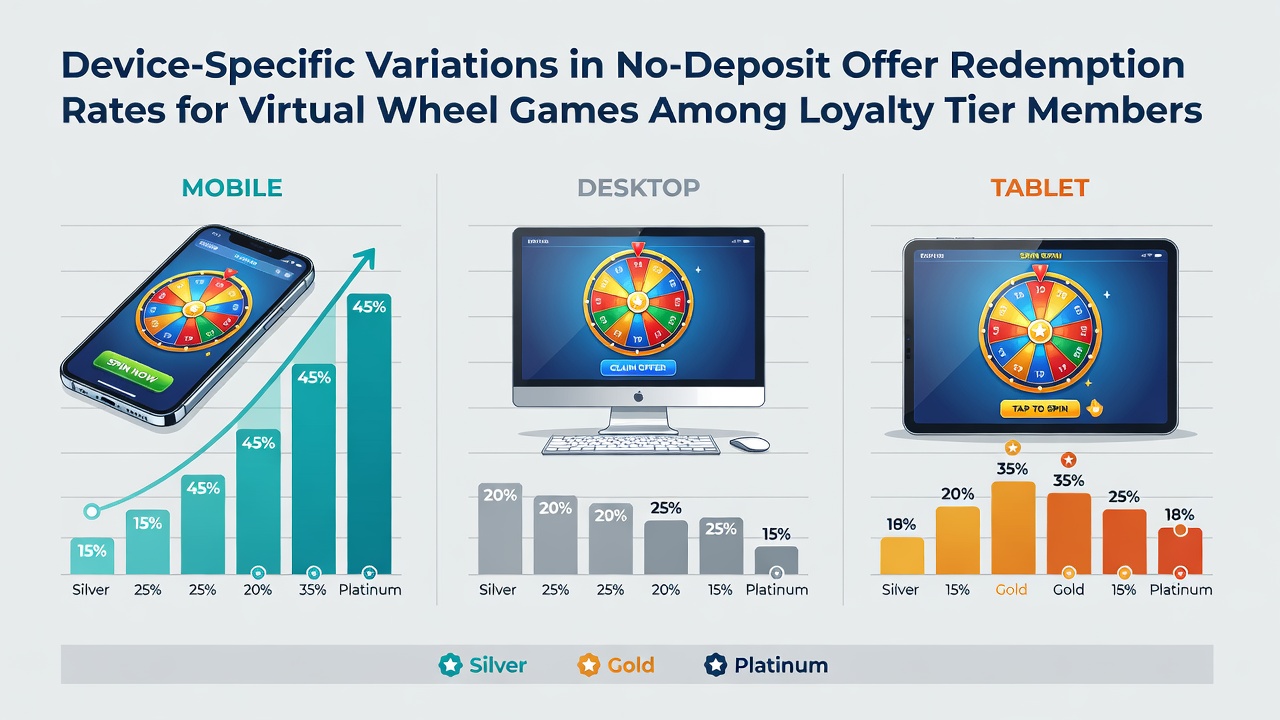
Digital gaming platforms have tracked redemption patterns for no-deposit offers tied to virtual wheel games with increasing precision since early 2025, and analysts continue to examine how device choice influences outcomes among players sorted by loyalty tier status. Virtual wheel games, which feature spinning mechanisms that award bonus credits or free spins without requiring an initial deposit, serve as entry points in many mobile and desktop environments. Observers note that redemption rates vary when players access these offers through smartphones, tablets, or desktop computers, while loyalty tiers such as entry-level, mid-tier, and elite segments add another layer of differentiation. Data compiled across multiple operators reveals that smartphone users in lower loyalty tiers complete redemption sequences at rates roughly 12 to 18 percent lower than desktop users in the same tier during the first half of 2026. The gap narrows among mid-tier members, yet desktop still holds an edge of approximately 7 percent. Elite-tier participants show the smallest device-based differences, suggesting that accumulated experience with platform interfaces reduces friction regardless of hardware.Platform Interfaces and User Pathways
Interface design plays a central role in these variations, as mobile applications often streamline wheel spins through touch gestures while desktop versions rely on mouse clicks and larger visual displays. Research from the University of Nevada, Las Vegas gaming laboratory indicates that touch-screen precision issues occasionally interrupt redemption flows on smaller devices, particularly when players attempt to claim offers during peak network hours. Desktop environments, by contrast, present fewer interruptions because larger screens accommodate confirmation dialogs without requiring repeated zooming or scrolling.
Loyalty tier progression further modulates these effects. Entry-level members frequently encounter additional verification steps when redeeming no-deposit offers, and those steps consume more time on mobile browsers than on dedicated applications. Mid-tier members gain access to expedited pathways, yet device performance still influences completion speed. Elite members benefit from pre-verified accounts that bypass many hurdles, which explains why their redemption rates remain high across all platforms.
Regional Data Patterns Emerging in Mid-2026
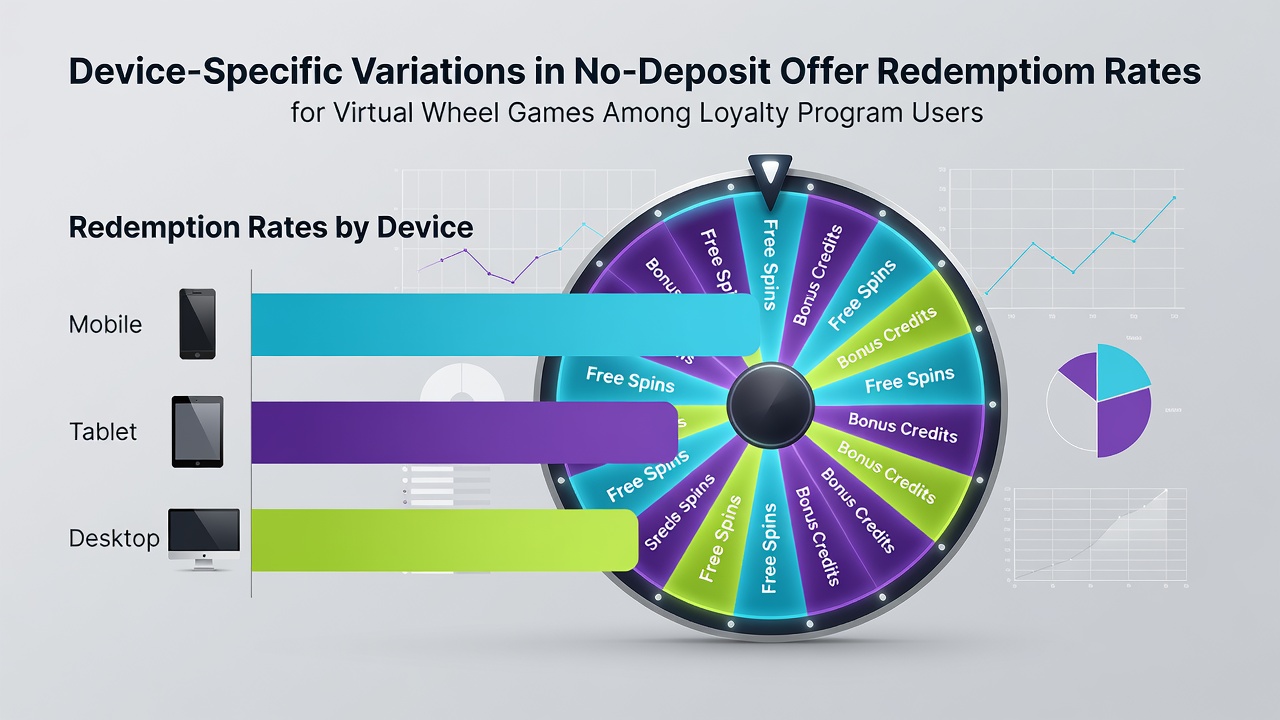
Figures released in June 2026 by the Nevada Gaming Control Board highlight similar device disparities within North American markets, while parallel reports from the Australian Communications and Media Authority point to comparable trends in Oceania. Smartphone redemption for virtual wheel offers among entry-level loyalty members averaged 41 percent in monitored jurisdictions, compared with 59 percent for desktop users. Tablet figures fell between these values at 48 percent. The consistency across regions suggests that hardware characteristics, rather than localized regulations alone, drive much of the observed variation.
Technical Factors Influencing Redemption
Network latency, operating system version, and application update status contribute to completion rates. Android devices running older software versions recorded the lowest redemption figures in several datasets, while recent iOS releases aligned more closely with desktop performance. Observers attribute part of this difference to background processes that compete for memory on legacy Android handsets, causing wheel animations to stall during the final confirmation stage of a no-deposit claim.
Security protocols also differ by device category. Many platforms apply stricter multi-factor authentication on mobile browsers to counter fraud patterns prevalent in that channel. These extra layers extend the time required to finish redemption, and lower-tier members who lack stored payment details experience the greatest delays. Desktop sessions, often conducted from recognized IP addresses, trigger fewer additional checks.
Operator Adjustments and Measurement Practices
Operators have begun adjusting offer structures in response to device-specific data. Some platforms now present simplified wheel interfaces exclusively to mobile users in entry-level tiers, reducing the number of confirmation screens. Others allocate higher-value virtual wheel outcomes to desktop sessions during limited promotional windows to balance overall redemption volumes. Measurement frameworks rely on session logging that records device type, loyalty tier, and timestamp at each step of the redemption process, allowing precise tracking without violating privacy standards.
Case examples illustrate the practical outcomes. One mid-sized European operator reported a 15 percent lift in mobile redemptions after introducing one-tap claim buttons for loyalty members above entry level. A separate North American platform observed that elite-tier tablet users redeemed at rates nearly identical to desktop users once account verification occurred automatically through biometric login features.
Conclusion
Device choice continues to shape redemption rates for no-deposit virtual wheel offers, with differences most pronounced among lower loyalty tiers and narrowing as members advance. Data gathered through June 2026 demonstrates that technical interface details, security protocols, and hardware capabilities interact with tier-based privileges to produce measurable patterns. Continued monitoring by regulatory bodies and academic researchers will clarify whether operator adjustments narrow these gaps further in subsequent reporting periods.