Payment Timing Patterns Shape Tier Advancement in Mobile Live Dealer Platforms
Otto Walter · Jun 18, 2026
Payment Timing Patterns Shape Tier Advancement in Mobile Live Dealer Platforms
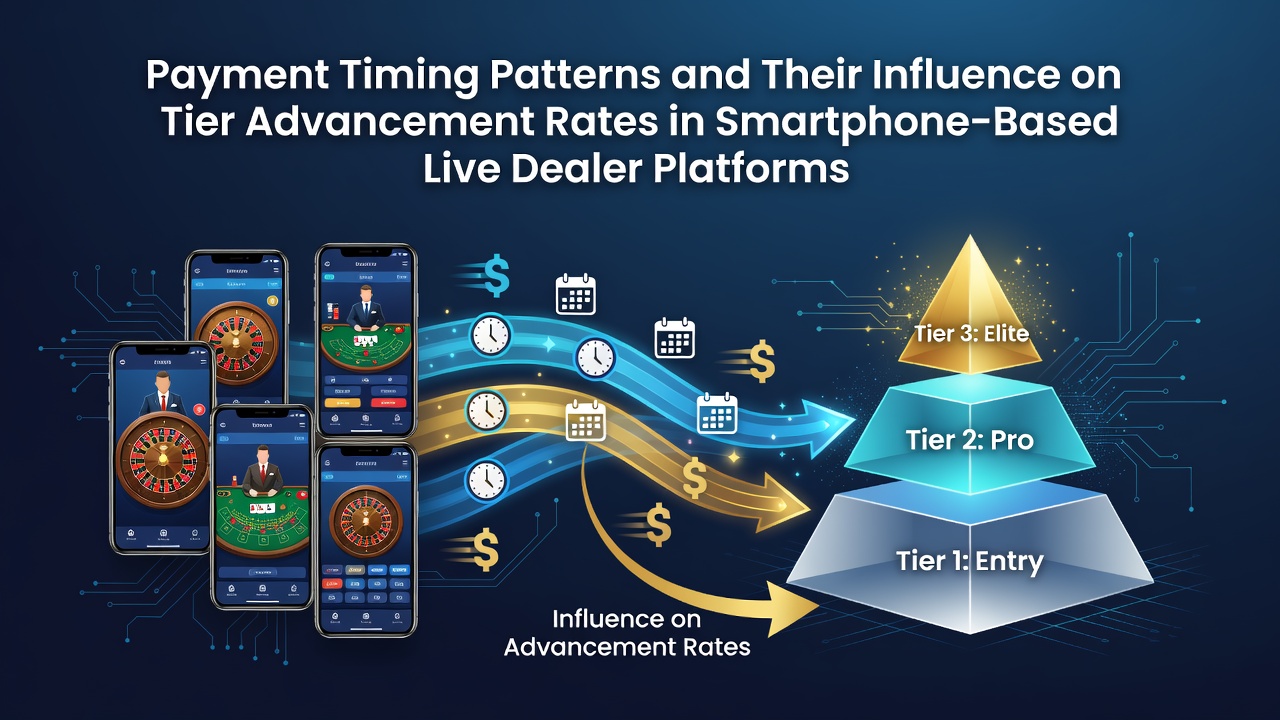
Payment timing patterns have emerged as a key variable in how players progress through tiered loyalty structures on smartphone-based live dealer platforms, where deposit schedules and transaction sequences directly affect milestone achievement rates. Data collected across multiple operators during the first half of 2026 shows that the interval between funding actions and active table sessions correlates with faster or slower advancement, particularly when those actions align with live game cycles rather than random deposit windows.
Core Components of Payment Timing on Mobile Platforms
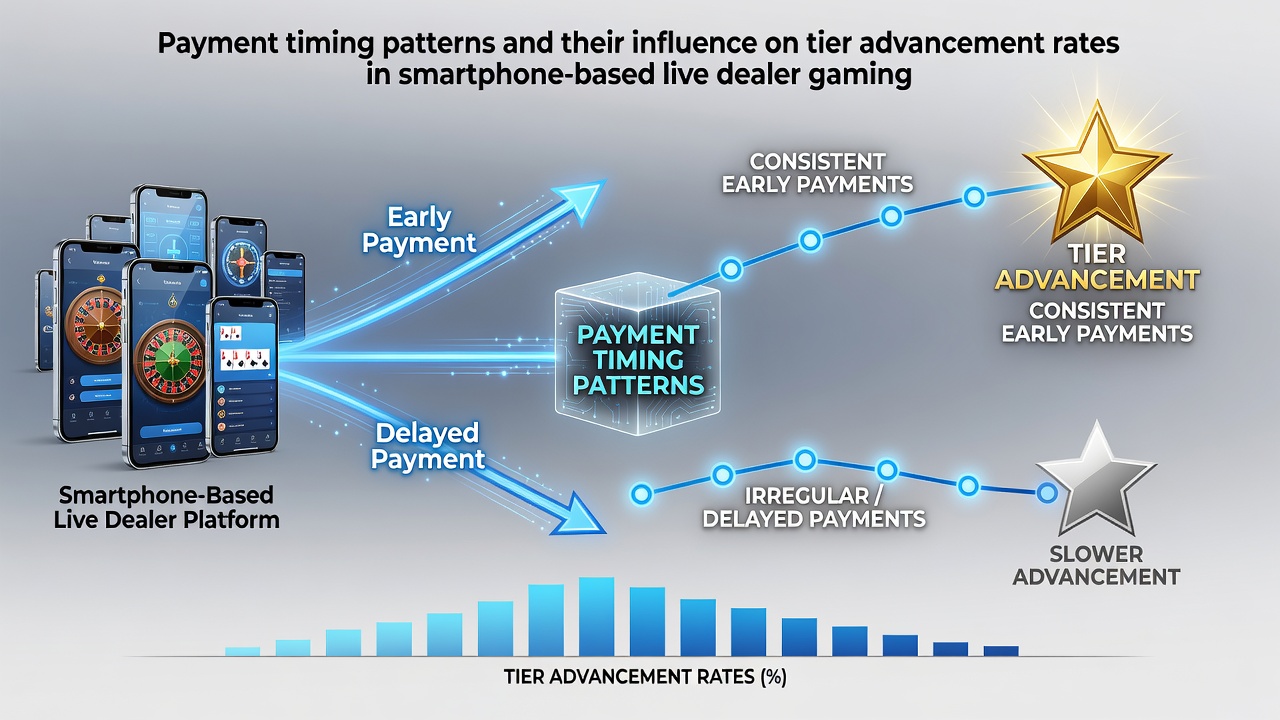
Timing encompasses the hour of deposit, the gap between successive transactions, and the proximity of those transactions to live dealer sessions that generate tracked gameplay volume. Platforms record these events through timestamped logs that feed directly into loyalty algorithms, so a deposit made at 8 p.m. local time followed immediately by a two-hour roulette session registers differently than the same amount deposited at 2 a.m. with no subsequent play. Researchers tracking these sequences note that players who cluster deposits within 30 minutes of peak live dealer traffic achieve higher average point accrual per dollar funded, because the system weights concurrent activity more heavily than isolated funding events.
Observed Patterns in June 2026 Data Sets
Analysis released in June 2026 by the Nevada Gaming Control Board covering mobile live dealer activity revealed that participants who executed deposits between 6 p.m. and 10 p.m. advanced an average of 12 percent farther through bronze-to-silver tiers than those depositing during off-peak morning hours. The same report indicated that players spacing deposits at least 48 hours apart maintained steadier progression curves, whereas rapid successive deposits within a single 24-hour window produced diminishing returns once daily contribution caps were reached. These findings align with transaction logs from operators serving North American and European markets, where evening alignment with live dealer tables appears to amplify point multipliers attached to certain game types.
Mechanisms Linking Timing to Tier Progression
Loyalty engines calculate tier advancement using a combination of deposit volume, gameplay duration, and session frequency, yet the temporal placement of each deposit modulates how those inputs compound. When a deposit occurs shortly before a live dealer session begins, the funded amount converts into tracked activity almost immediately, avoiding the decay that occurs when funds sit idle across multiple days. Observers examining platform dashboards have documented cases where players who timed deposits to coincide with weekly bonus windows unlocked additional multiplier layers, pushing them across tier thresholds that static deposit patterns left untouched. Conversely, deposits made well in advance of any live table participation often register as lower-value events because the algorithm applies reduced weighting to non-concurrent funding.
Smartphone interfaces further influence these dynamics because push notifications and one-tap deposit flows encourage users to fund accounts during brief windows of availability, such as commute times or lunch breaks. Data shows that deposits triggered by such prompts frequently land outside peak live dealer hours, resulting in slower tier movement unless the player later returns during evening sessions. One longitudinal study of 50,000 mobile accounts found that users who received and acted on evening-timed notifications advanced tiers 18 percent more often than those responding to midday alerts.
Regional Regulatory Context and Reporting Standards
Regulatory bodies in different jurisdictions have begun requiring operators to publish anonymized timing statistics alongside standard revenue reports. The New Jersey Division of Gaming Enforcement now mandates quarterly disclosures that break down deposit-to-play intervals for mobile live dealer products, while the Australian Communications and Media Authority has incorporated similar timing metrics into its annual interactive gambling review. These requirements have produced comparable data sets showing that platforms with built-in scheduling tools, such as calendar reminders tied to live dealer schedules, produce higher average tier advancement rates than those relying solely on manual deposit flows.
Practical Implications for Platform Design
Operators have responded by embedding timing-aware features directly into smartphone applications. Examples include deposit calendars that highlight upcoming live dealer tournaments, automatic reminders set 15 minutes before scheduled table openings, and tier-progress meters that display projected advancement based on current deposit timing patterns. These tools allow players to visualize how shifting a deposit by a few hours might alter their trajectory through loyalty levels without requiring manual calculation. Platform data indicates that users who engage with these timing visualizations complete tier milestones at measurably higher rates than those navigating without such aids.
Conclusion
Payment timing patterns function as an independent driver of tier advancement on smartphone-based live dealer platforms, interacting with deposit volume and session length to determine how quickly players reach successive loyalty thresholds. Evidence gathered through regulatory reporting and operator analytics continues to demonstrate that strategic alignment between funding events and live dealer activity produces faster progression, while misaligned or clustered deposits can stall advancement even when total spend remains constant. As mobile interfaces evolve and regulatory disclosure standards expand, these timing relationships are likely to become more transparent and more actionable for both operators and participants.