Tracing Encryption Standards and Their Role in Unlocking Diverse Table Options Within Handheld Gaming Reward Ecosystems
Casey Hoffmann · Aug 18, 2026
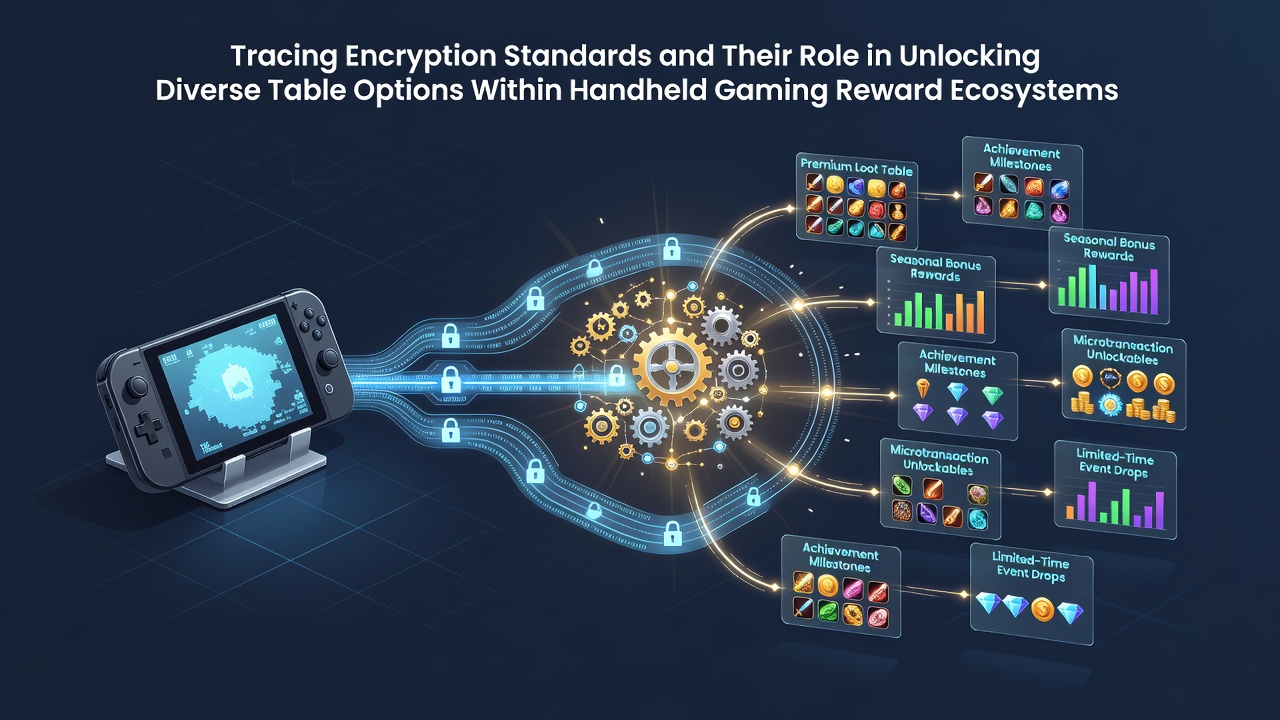
Tracing Encryption Standards and Their Role in Unlocking Diverse Table Options Within Handheld Gaming Reward Ecosystems
Encryption standards have evolved over decades to support secure data transmission in mobile environments, and their application within handheld gaming reward ecosystems now determines which table options become accessible to users. Standards such as AES-256 and TLS 1.3 establish the cryptographic foundation that protects transaction data, player identities, and reward balances while enabling platforms to offer varied table games including blackjack, roulette, and poker variants. Without these layered protections, regulatory compliance requirements restrict the range of table options that operators can integrate into reward structures.
Development of Core Encryption Protocols in Mobile Contexts
Early mobile gaming applications relied on SSL 3.0 and TLS 1.0, yet vulnerabilities identified through public audits prompted migration to stronger suites by the mid-2010s. Researchers at institutions tracking cryptographic adoption documented that TLS 1.2 became the baseline for most handheld platforms by 2018, with forward secrecy mechanisms added to prevent retrospective decryption of session keys. In handheld reward ecosystems, these upgrades directly expanded the number of table games that could process real-time wagers and loyalty point allocations without exposing sensitive metadata. Data from industry monitoring groups shows that platforms adopting TLS 1.3 recorded measurable increases in supported table variants because reduced handshake latency allowed simultaneous management of multiple dealer-interaction sessions.
Integration With Reward Tracking and Table Game Diversity
Reward ecosystems on handheld devices accumulate points across sessions, and encryption standards govern how that data moves between client applications and backend servers. AES-GCM authenticated encryption protects both the point ledgers and the randomized outcomes delivered by live dealer interfaces, which in turn permits operators to unlock additional table options such as multi-hand blackjack or progressive roulette without risking integrity of the reward calculations. Observers note that jurisdictions requiring end-to-end encryption see broader catalogs of table games tied to tiered loyalty programs because regulators accept the demonstrated resistance to interception. Figures released by standards organizations indicate that systems employing post-quantum hybrid key exchanges began pilot deployments in 2025, preparing ecosystems for future table expansions that demand higher computational security margins.
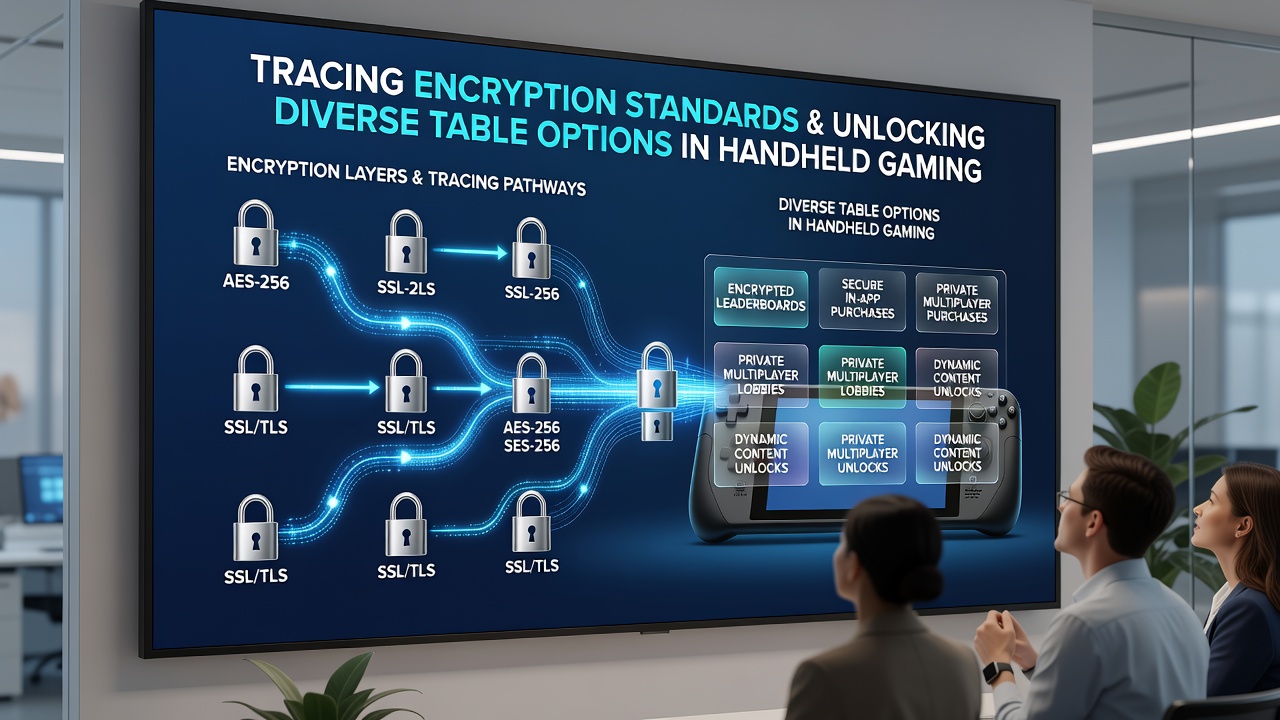
During August 2026 several North American and European operators completed phased rollouts of updated cipher suites that satisfied new interoperability guidelines issued by cross-border gaming associations. These updates coincided with the addition of previously restricted table variants into existing reward pathways, demonstrating a direct correlation between strengthened encryption posture and expanded game libraries. Platform telemetry collected after the updates revealed that session drop rates during dealer interactions declined, allowing sustained accumulation of loyalty milestones across more diverse table formats.
Regulatory Alignment and Technical Implementation Patterns
Regulatory bodies in multiple regions, including the National Institute of Standards and Technology in the United States and ENISA in the European Union, publish technical references that handheld gaming providers reference when selecting encryption implementations. Compliance with these references frequently determines whether an operator receives approval to link additional table games to reward redemption features. Technical audits conducted by independent laboratories verify that key management practices and certificate pinning configurations meet thresholds before new table options receive certification for inclusion in loyalty programs. Patterns observed across deployments show that operators who maintain centralized key rotation schedules achieve faster approval cycles for table expansions compared with those relying on static configurations.
Future Trajectory of Standards and Ecosystem Capabilities
Continued refinement of encryption standards, particularly those addressing quantum-resistant algorithms, is expected to further influence the composition of table options available within handheld reward ecosystems. Laboratory tests conducted by academic groups have demonstrated that hybrid schemes combining classical and lattice-based primitives maintain acceptable latency on current mobile hardware while providing forward security guarantees. As these schemes move from test environments into production platforms, operators anticipate the ability to introduce additional interactive table formats that require higher volumes of encrypted state synchronization between devices and reward servers. Documentation from standards working groups indicates that ratification timelines for several candidate algorithms target completion before 2028, which would align with projected growth in mobile table gaming participation metrics.
Conclusion
Encryption standards function as the gatekeepers that determine how many and which table options integrate into handheld gaming reward ecosystems. Their technical specifications directly affect latency, compliance status, and data protection levels that regulators and platforms require before authorizing new game variants. Ongoing transitions toward stronger and quantum-resistant protocols continue to reshape the boundaries of what reward structures can support on mobile devices, with measurable effects on the diversity of table experiences offered to users.